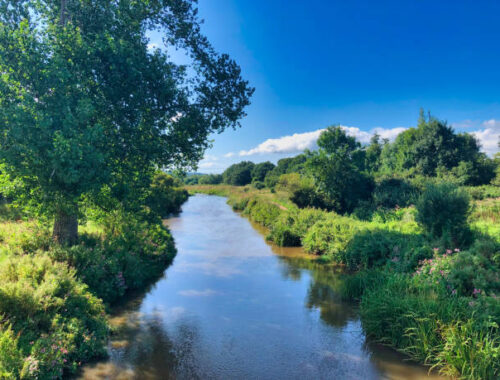
Myriophyllum aquaticum, Parrot’s feather
Myriophyllum aquaticum, Parrot’s feather
- Myriophyllum aquaticum, Parrot’s feather, is an aggressive hydrophyte capable of rapid, dense growth displacing native species, reducing biodiversity, decreasing water quality, and choking waterways.
- Prior to legal restrictions in 2014, Parrot’s feather was commonly sold as a pond plant in garden centres, and although now illegal to sell it is still available by some outlets and online.
- Peoples’ method of discarding this invasive non-native species has led to succession into natural waterways from fragmentation through riparian systems, floods, and also through overland transfer by birds, boats, or fisherman.
- Parrot’s feather seriously damages physical and chemical characteristics of lakes and waterways, and is considered a threat to tourism, and other recreational activities resulting in negative economic impact.
- Due to Parrot’s feather being suitably adapted to fluctuating water levels with emergent stems surviving on wet banksides, and even years after draining ponds and lakes, it is incredibly difficult to remove.
- It has the inability to store phosphorus or carbon, resulting in the plant being able to survive severe winters.
- The aquatic food web structure is seriously affected due to shading within the pond and lake water column causing limitation in zooplankton and diatom populations.
Growing Conditions of, and Dispersal of Myriophyllum aquaticum, Parrot’s feather
- Parrots’ feather colonises in still and sluggish waters such as ponds, lakes, drainage ditches, canals, backwaters, lagoons, and sloughs, particularly in eutrophic conditions.
- The shoots rapidly grow in springtime from overwintering rhizomes as the water temperature increases.
- The rhizome function and structure support emergent growth during summer months.
- Natural dispersal occurs by transportation of plant fragments by riparian corridors, wildfowl, grazing livestock, dogs, and humans.
- It is able to grow as a terrestrial plant as ponds and waterways dry out.
- Only female plants establish here in the UK, therefore spreading by vegetative means only.
- Suitable bio-hazard procedures should be in place to restrict downstream movement of stem fragments from cutting operations as regrowth is rapid from this type of propagule.
Impacts of Myriophyllum aquaticum, Parrot’s feather
- Dense mats of the Parrot’s feather cover the water surface, restricting light, depleting oxygen levels, and outcompeting native flora.
- It damages invertebrate communities by shading algae directly effecting the food-web from the bottom-up.
- Once established it outcompetes native species, dominating waterbody.
- Risk of localised flooding due to blocked watercourses, drainage channels and riparian systems.
- Reduces amenity value of waterbody making it unsuitable and unsafe for leisure activities.
- Causes silt build-up in waterways by slowing down velocity of flow and trapping sediment.
Control Measures for Myriophyllum aquaticum, Parrot’s feather
Biological:
- High tannin content of plant makes it unfavourable for grazing fish communities, including Grass Carp ‘Ctenopharyngodon idella’, thus biological control, at least here in the UK is not possible.
Environmental:
- Increase of shade over emergent growth can be achieved by using light barriers such as weighted down UV sheeting or increase of tree planting on south side of waterbody.
- Parrot’s feather is not tolerable to fast flow, thus narrowing of flowing channels can help to control the growth.
Mechanical:
- Keep waterways clear from overhanging branches or fallen trees and cut-back of hydrophyte and macrophyte populations.
- Dredging silt to increase water velocity and depth creates less favourable growing conditions.
- Removal by hand or rake. Vegetation must be left on bankside and covered to prevent spread. Any composting must be away from aquatic habitats.
Chemical:
- Effective, however will also kill favourable hydrophytes. Herbicides recently revoked for aquatic use (June 2018).
- Any spraying of herbicides on or near water MUST be agreed with the Environmental Agency by completing a form AqHerb01.
- A suitable adjuvant such as Topfilm improves efficacy for herbicide to adhere to the waxy leaf and stem structure as seen in most hydrophytes.
- The weight of spray with adjuvant can cause emergent vegetation to collapse causing herbicides to be washed off before translocation throughout the plant.
- The use of a dye spray indicator is important for accuracy of spraying.

Previous
How do I Build a Wildlife Pond?

Newer
Wildlife Pond Top Tips
You May Also Like
The Importance of Trees
Farming in Protected Landscapes Programme (FiPL)