Upstream Thinking Programme
Upstream Thinking Programme (UST)
Upstream Thinking Programme in Devon is an innovative water catchment management scheme, instigated by South West Water and delivered as a partnership of regional agencies, trusts and charities to reduce point-source nutrient pollution in our waterways. The programme has been running since 2010 and is in its third phase until 2025. Over the next five years, £9 million will be delivered to provide nature-based expertise, ecological advice, and habitat restoration across ten strategically important water catchments throughout the Southwest to improve water supply and water quality.
The programme works with a wide range of partners including Westcountry Rivers Trust, South West Lakes Trust, Devon and Cornwall Wildlife Trusts, the Farming and Wildlife Advisory Group and Government agencies such as Natural England with scientific research conducted by the University of Exeter to evaluate the progress of the Upstream Thinking Programme.
Why is UST important?
As many of us are aware, the intensity of human activities, changes in land-use and the methods by which we manage our land are placing more pressure on our natural ecosystems, affecting their physical states, and restricting their capacity to carry out natural processes. These pressures largely come from intensive agriculture and increases in farming products such as artificial fertilizer and herbicide and pesticide use. These substances increase nutrient input and encourage eutrophication in our water, driving harmful issues such as algal blooms and low water quality.
In the Southwest, most of our drinking water is obtained from surface waters such as rivers and reservoirs. Pressures from developments and intensive agriculture in upland areas are creating problems in downstream watercourses, affecting the quality and health of our drinking water. It’s important to assist in supporting our natural ecosystem’s capacity to cope with increasing pressures so that our drinking and bathing water quality improves.
Upstream Thinking, Nature Recovery and Habitat Enhancement
The foundations of Upstream Thinking go hand in hand with nature recovery and habitat enhancement. By creating and restoring natural habitats in upland catchment areas, this promotes the resilience of aquatic ecosystems to cope with the effects of increasing pollution.
Through a delivery of partnerships acrost the Southwest, UST works with farmers and landowners to plan solutions for reducing nutrient pollution entering upstream water catchments. These include supporting capital grants to provide practical interventions and ecological planning advice for habitat restoration, safe disposal of unwanted chemicals and good agricultural soil practice.
How you can get involved
Through partners on the programme, there are various opportunities to engage directly with the health of our water catchments and help towards delivering Upstream Thinking by taking part in citizen science projects and volunteering to promote the importance of water ecosystems for biodiversity and wildlife but also human health and wellbeing.
A balanced, healthy water ecosystem supports life in all its forms, providing a resilient landscape as we approach a changing climate to attenuate flood risk and support our economy.
Partners to connect with
Farming and Wildlife Advisory Group
How can Lost Habitat Help
Lost Habitat specialise in nature recovery and habitat enhancement through nature landscaping. We can assist in creating, maintaining, and restoring upland aquatic ecosystems and the areas around them. If you are a landowner or have access to land you think may benefit from our nature landscaping work to contribute towards Upstream Thinking, please get in contact with us.
Reedbeds and River Buffer Strips as Natural Water Filtration
Creating and managing reedbeds and riparian buffer strips along rivers, lakes and ponds provide natural water filtration by accumulating runoff sediment and nutrients. The root systems of plants like Common Reed and Reedmace are excellent at absorbing and retaining nitrates and phosphates and with regular maintenance can effectively remove contaminants from a waterbody. This increases overall water quality as well as providing new habitat, assist with flood risk mitigation and benefit biodiversity.
Invasive Species Removal from Waterways
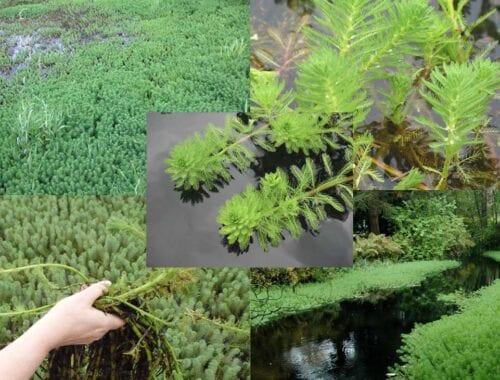
Invasive species can spread prolifically along waterways due to their dispersal carried downstream. Species such as Himalayan Balsam and Parrot’s Feather can grow extensively eventually obstructing natural water processes, outcompeting native vegetation, and blocking waterways. Frequent removal of species such as these helps to maintain a natural flow and health of a waterway environment.
Wetlands and Wetland Scrapes
Wetlands, wet woodlands, water meadows and wetland scrapes are important habitats for mitigating nutrient throughflow into downstream watercourses. Physical, biological, and chemical processes are responsible for essentially storing and removing nutrients from an aquatic ecosystem where nutrients such as nitrogen and phosphorus from farmed fields wash into a waterbody which are crucial habitats for flora and fauna. Creating and restoring these water ecosystems are a cost-effective solution to reduce water pollution, hold water to reduce downstream flooding and are a valuable carbon sink.
For further information visit our pages on Wildlife Ponds, Wetlands & Lakes or email restoration@losthabitat.uk

Gardening for Wildlife

You May Also Like
Farming in Protected Landscapes Programme (FiPL)
How do I Build a Wildlife Pond?